Best Thermometer for Steak: Instant-Read or Leave-In?
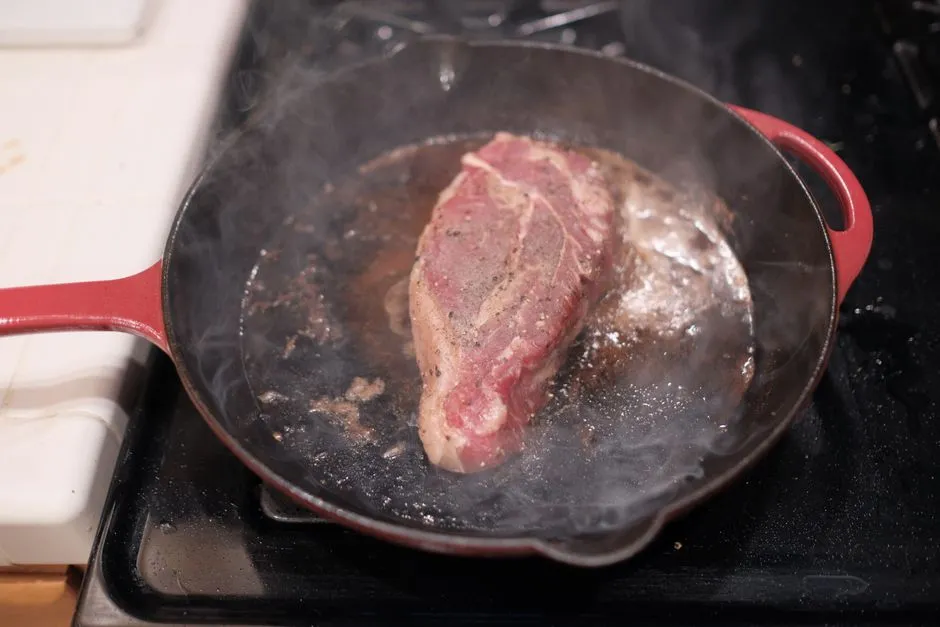
Which thermometer should you buy first for steak?
For most home steak cooks, our first pick is a digital instant-read thermometer: it suits spot checks across individual steaks. Add a leave-in alarm thermometer for monitoring a thick cut during a longer oven or smoker stage. This is a desk-researched choice by task, not a tested product ranking. For whole beef steaks, the food-safety minimum is 145°F (63°C), followed by at least three minutes of rest.
An instant-read measures temperature when you insert it; a leave-in probe stays in the food during cooking, with a separate display on suitable wired models. An alarm is useful, but it does not check the rest of the steak for you. Our buying criteria are placement, reading speed, usable heat limits, clear controls and replacement-probe availability. Start with the job you actually cook most often.
Which type fits your usual steak dinner?
| Your usual task | Our type pick | Why it fits | Worth knowing |
|---|---|---|---|
| Thin steaks or several steaks in a pan | Digital instant-read | Take separate spot readings where needed | You must return to check each piece |
| A thick steak with a longer oven stage | Instant-read first; add a leave-in alarm | Monitor one location, then verify elsewhere | The cable, probe and display have separate limitations |
| Longer barbecue cooks as well as steak | Both types | Assign continuous monitoring and final checks to different tools | Two tools mean two sets of instructions and storage needs |
These are editorial priorities, not a claim that everyone needs two thermometers. If you mainly cook a pair of steaks and would rarely use an alarm, begin with the instant-read. If your next project is a reverse-seared steak, a leave-in becomes a more relevant second purchase.
First pick: what makes an instant-read useful for steak?
Look for a probe whose sensing area can fit inside the cut, an easily read display and a stated response time. A long metal stem does not necessarily mean the sensor measures only at its point.
For example, the dial instant-read type described by University of Maryland Extension needs 2–2½ inches of insertion and measures along a section of stem. That is a reason to check the required insertion depth before buying for thin steaks. Sideways insertion can accommodate the sensing area; follow the particular instrument's instructions.
“Instant” also needs a number beside it. The published ThermoPop 2 specifications give a 2–3-second response for its 4.5-inch version and 3–4 seconds for its 8-inch version. Those are manufacturer figures for those versions, not timings we measured or promises for other digital thermometers. Probe length alone is not a speed specification.
Our preference for everyday steak is a straightforward display and a probe suited to the cuts you buy. Rotating or backlit numbers may be worth paying attention to if they make your normal reading position easier. Decide that before adding features to a shopping shortlist.
The drawback is active checking. This type is not your oven monitor. The ThermoPop 2 manual specifically says not to leave it inside ovens and to clean its probe immediately after each measurement to prevent cross-contamination. A high measurement range is not permission to expose the entire thermometer to that temperature.
Second pick: when is a leave-in alarm worth adding?
A leave-in earns its place when you want a temperature reading during a longer cooking stage. Choose one with instructions that cover your intended appliance and an alarm you can understand. For planning that stage, use our reverse-sear timing guide; the thermometer buying decision is separate from a promise about cooking time.
The important drawback is that “heat resistant” describes several different parts. Consider these published figures for the wired ThermoWorks DOT:
| Specification | Published limit or range |
|---|---|
| Measurement range | −58 to 572°F |
| Cable maximum | 700°F |
| Probe transition/handle maximum | 644°F |
| Display unit operating range | 32 to 122°F |
The highest figure is not a rating for the whole assembly. The DOT instructions qualify the cable and transition maxima as short-period limits. They prohibit probe contact with flames or coals and warn against cable contact with heating elements, flames, coals or oven racks. The display must not go inside the cooker or directly on its hot lid. Avoid pinching or kinking the cable; use heat protection when handling the hot probe.
Use a leave-in only where both thermometer and appliance instructions permit the setup. A suitable oven-stage arrangement does not establish suitability for a direct-flame sear.
Which extras belong on your shortlist?
First, check whether a damaged probe can be replaced and exactly which replacement fits. DOT's manual specifies its compatible Pro-Series probes. Do not assume a connector that looks similar establishes compatibility.
Next, distinguish a food probe from an ambient-temperature accessory. The same manual lists an optional air probe with a grate clip separately from the supplied penetration probe. Buy for the measurement you want; a steak reading and a cooker-air reading are different tasks.
For a simple steak dinner, our priority order is readable temperature, suitable probe, clear limits, then convenient controls. Treat phone connectivity and saved graphs as optional unless you can name a job you need them to perform. Before buying an extra channel, write down which additional piece of food you would monitor. This keeps the comparison tied to your cooking rather than the longest feature list.
How do you check readings after buying?
For steak, check the thickest part away from bone or fat, and take readings in several places. Keep the probe from touching the pan; fit the full sensing area inside the food. Maryland's placement guidance explains why one convenient insertion is insufficient.
An ice-water check is a useful initial accuracy check, not proof of accuracy at every cooking temperature. ThermoWorks' ice-bath method starts with a container full of ice, adds water to about half an inch below the ice surface, and allows one minute before measuring. Stir with the probe in the middle without contacting the container's sides or bottom. Compare the reading with 32°F (0°C) and the maker's stated accuracy; do not adjust a thermometer that is within specification. Follow its manual if the result falls outside that allowance.
Finally, choose a safe food endpoint independently of a product's preset or serving-preference chart. FoodSafety.gov specifies 145°F (63°C) plus a three-minute rest for whole beef steaks, and 160°F (71°C) for ground beef. Our steak temperature guide explains that distinction. A clearer display helps you read a temperature; it does not change the temperature the food needs to reach.