How to Slice Steak Against the Grain
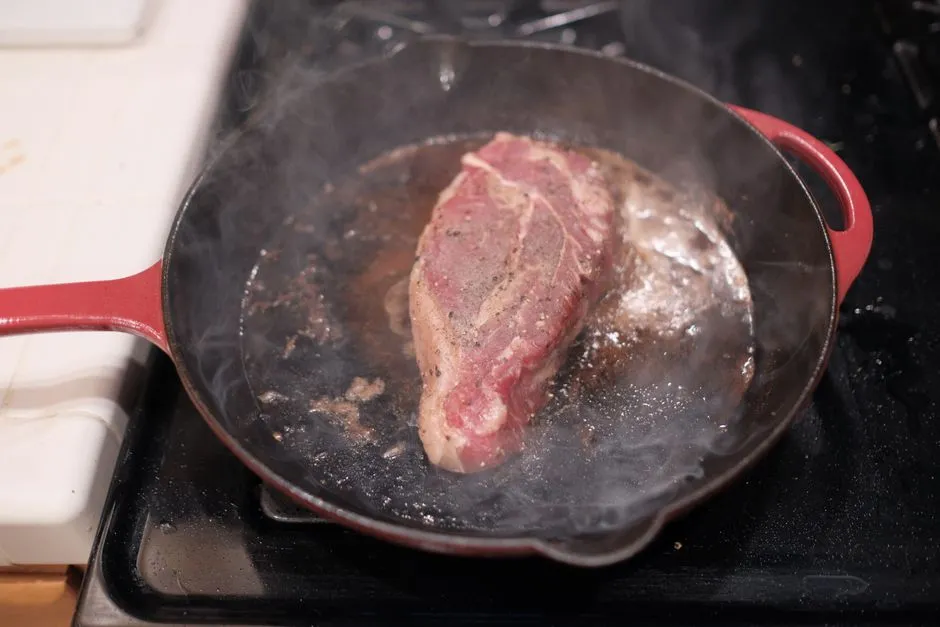
- Find the lines before the crust hides them
- Grain and knife angle are different things
- Map the raw steak safely
- Cook to a safe measured temperature
- Rest before the knife moves
- Use a sharp slicing knife
- Slice flank and skirt steak thinly
- Give tender steaks broader slices
- Separate muscles when the map changes
- Match slice thickness to the dish
- Troubleshoot a chewy slice
- Store slices promptly
Find the lines before the crust hides them
Cutting steak against the grain means slicing across the direction of its muscle fibers. It sounds like a tiny finishing detail because it happens after the dramatic heat and smoke. In the mouth, however, it decides whether each bite contains short fibers or asks your jaw to untangle a rope project.
The easiest time to identify the grain is before cooking. Look at the raw steak under bright light, note which way the parallel fibers run, and take a quick phone photo or trim a tiny corner as a marker. Once the surface has browned, the useful map may be wearing a very convincing crust disguise.
Grain and knife angle are different things
The grain is the direction of muscle fibers through the meat. Cutting against it means the blade crosses those fibers roughly at a right angle. Cutting with it means the blade travels parallel, leaving long fibers intact in each slice.
A bias cut describes a different angle: the blade tilts relative to the cutting board. A bias can make a thin cut wider and more attractive, but it does not automatically cross the grain. You can cut on a beautiful 45-degree bias and still travel directly along every fiber.
First orient the steak so the knife crosses the fibers. Then tilt the blade if the cut and presentation benefit from it. Direction first, theatre second.
Map the raw steak safely
Place the raw steak on a dedicated board. Look for thin parallel lines and seams. Gently pull the meat lengthwise; fibers may become easier to see. On flank and skirt steak, the grain is usually prominent. On a strip or ribeye, the steak may contain different muscles with changing directions.
Take a photo from directly above or cut a small notch in one corner that indicates the direction. Do not score across the eating surface solely as a reminder. Season and cook the steak, then wash and sanitize the raw-meat board, knife, counter, and anything else touched.
Keep the cooked-steak board separate and clean. USDA warns that raw beef or its juices can cross-contaminate cooked and ready-to-eat food. A perfect cross-grain slice on a contaminated board is an extremely poor trade.
Cook to a safe measured temperature
Slicing technique cannot repair unsafe cooking. USDA's minimum for whole beef steaks is 145°F (62.8°C), followed by at least a 3-minute rest. Measure the thickest center away from bone, fat, and gristle.
Ground beef requires 160°F, and processed products such as mechanically tenderized, injected, or stuffed beef may carry different validated label instructions. Follow the product. This article discusses intact steaks, not a universal rule for everything that once met a cow.
Our reverse-sear steak guide shows how to reach the whole-steak minimum while building a crust in a final skillet stage.
Rest before the knife moves
Rest a whole beef steak for at least the required 3 minutes after it reaches 145°F. For a thick steak, 5 to 10 minutes may also help reduce the rush of juice onto the board, though size and cooking method affect the ideal sensory rest.
Do not press, pierce, or cut repeatedly during the pause. Use a loose foil tent only if needed; tight wrapping traps steam and softens the crust. A thermometer reading plus a real rest is more reliable than squeezing the steak and interpreting its mood.
Resting does not make an under-temperature steak meet the guidance used here. Reach the measured minimum first.
Use a sharp slicing knife
Choose a long, sharp chef's knife or slicing knife. A smooth edge makes cleaner passes than a dull blade that saws and compresses the meat. Put the rested steak on a stable board with a damp towel underneath to prevent sliding.
Keep fingers curled and the knife path clear. Draw the blade through in long strokes rather than chopping straight down. If the steak is wider than the knife, use two smooth passes without shredding the surface.
Clean the knife before it touches a cooked steak if it handled the meat raw. This is not fussy choreography; it is basic separation between raw and ready-to-eat food.
Slice flank and skirt steak thinly
Flank and skirt steaks have conspicuous, relatively long fibers. Turn the cooked steak so those lines run left to right, then make cuts from top to bottom—across the lines. Aim for slices about ¼ inch thick. If the meat still feels firm, cut slightly thinner.
Tilt the knife on a modest bias for broader pieces while maintaining the cross-grain direction. Very long steaks can be divided into two manageable sections before final slicing, as long as each section remains correctly oriented.
If you have forgotten the grain direction, inspect a cut end. Long visible strands running through the slice suggest you cut with the grain; rotate the piece 90 degrees and try again.
Give tender steaks broader slices
Ribeye, strip, tenderloin, and sirloin do not all need paper-thin treatment. Slices ⅜ to ½ inch thick can preserve a satisfying steak texture. The right thickness is preference; crossing the fibers is the useful constant.
On ribeye, the central eye and the outer cap can point in different directions. Separate them along the natural seam after resting, remove any large seam fat as desired, and slice each muscle across its own fibers.
Tenderloin fibers can be subtle. Look at the tapered end before cooking and retain that reference. Its tenderness means grain direction is less dramatic than on flank, but the principle still applies.
Separate muscles when the map changes
Some cuts are not one uniform bundle. Tri-tip is the famous troublemaker: its grain can change direction across the roast. Brisket also has two major muscles whose fibers do not share one orientation. Even an individual steak may include a cap or adjacent muscle.
Cut the cooked meat into sections at the point where the direction changes. Rotate each section independently, then slice across its grain. Do not commit to one grand line through the whole cut simply because it looks efficient.
For smoked beef short ribs, bones and muscle seams make portioning different, but the same final question applies: which direction are the visible fibers travelling in this piece?
Match slice thickness to the dish
For sandwiches, tacos, and salads, use thin cross-grain slices that distribute easily. For a plated steak, broader slices retain more heat and give the diner a substantial bite. For a shared board, cut only part of the steak at first so the remainder stays warmer.
Spoon chimichurri over the serving portion, not the whole storage batch. Acid and salt can change the surface texture during a long hold, and untouched sauce keeps better than sauce that has wandered through every plate.
Avoid slicing a steak long before serving. More exposed surface means faster cooling and moisture loss. Have the board, knife, plates, and sauce ready during the rest so slicing leads directly to dinner.
Troubleshoot a chewy slice
If the steak seems chewy, inspect a slice. Do long parallel fibers run from one end to the other? Rotate the remaining piece and cut across them. If fibers are already short, the problem may be the cut, cooking method, insufficient tenderization during a long barbecue cook, or simple overcooking.
Cutting thinner can improve the eating experience but cannot make every cut identical. Nor can a diagonal presentation compensate for a knife travelling along the grain. When in doubt, sacrifice one small diagnostic slice before turning the entire steak into evidence.
Store slices promptly
Refrigerate cooked beef within 2 hours in a shallow covered container. USDA lists home-cooked beef at 3 to 4 refrigerated days; reheat leftovers to 165°F (73.9°C). If you expect leftovers, keep a portion unsliced so it loses less moisture during storage.
The whole technique fits in one sentence: find the fibers, cook safely, rest, and cut across them. The trick is doing the finding before heat makes the answer harder to see.
This guide provides general food-preparation information. Follow current government food-safety guidance, product labels, and equipment instructions. Seek qualified advice for individual dietary or health needs.